Signs and Symptoms of Malaria: A Guide for Port Harcourt Residents
Introduction
It starts with a subtle, familiar malaise—a mild headache, a faint chill, or a vague feeling of bodily fatigue. For many residents living in Port Harcourt and across Rivers State, the initial temptation is to dismiss these sensations as "ordinary stress" or the natural byproduct of a demanding work week. However, in our tropical environment, delaying critical health decisions can carry severe consequences.
Malaria remains one of the most significant public health challenges in Nigeria. Because its early presentations mirror those of common viral illnesses, misdiagnosis and self-medication are widespread. Waiting too long to seek professional medical validation allows the underlying parasite to multiply unchecked, turning an easily treatable infection into a life-threatening medical emergency.
Understanding the precise signs and symptoms of malaria, combined with prompt, definitive diagnostic testing, is the most reliable way to protect your family and maintain workforce productivity.
What Is Malaria?
Malaria is a preventable and curable life-threatening disease caused by protozoan parasites belonging to the genus Plasmodium. When an infected mosquito bites a human, it injects these microscopic parasites directly into the bloodstream, initiating a complex biological cycle that primarily targets the liver and red blood cells.
While several species of the parasite exist, their impact and prevalence vary significantly:
Plasmodium falciparum: This is the most prevalent and deadly malaria parasite across Nigeria and sub-Saharan Africa. It is notorious for causing severe, rapidly progressive illness, organ failure, and cerebral malaria if left untreated.
Plasmodium vivax and Plasmodium ovale: These species are known for their ability to form a dormant stage (hypnozoites) in the human liver. They can reactivate weeks, months, or even years after the initial infection, causing periodic relapses.
Plasmodium malariae: This species causes a milder, chronic form of malaria characterized by a prolonged cycle of fevers recurring every three days (quartan fever).
According to data from the World Health Organization (WHO) 2025 World Malaria Report, Nigeria continues to bear the highest share of the global malaria burden, accounting for approximately 24.3% of all global cases and 30.3% of global malaria deaths. Furthermore, the Federal Ministry of Health's National Health Statistics Report revealed that over 24.4 million Nigerians tested positive for malaria within just the first nine months of 2025.
These statistics highlight the critical importance of maintaining a high index of clinical suspicion for any unexplained febrile illness.
Causes and Risk Factors
The transmission of malaria depends on a delicate intersection of parasite biology, mosquito vectors, human hosts, and local environmental conditions.
[Infected Mosquito Bite] ──> [Parasites Travel to Liver] ──> [Multiply & Mature] ──> [Infect & Destroy Red Blood Cells]
The Transmission Cycle
Malaria is not contagious and cannot be transmitted directly from person to person through casual contact. Instead, it relies on the female Anopheles mosquito as its primary vector.
The mosquito takes a blood meal from an individual already infected with malaria, ingesting the parasite's sexual forms.
The parasite undergoes a brief developmental cycle within the mosquito's gut over 8 to 18 days.
When the mosquito bites a healthy individual, it transmits mature parasites (sporozoites) via its salivary glands, restarting the cycle.
Environmental and Local Risk Factors
The unique geographic and climatic landscape of Rivers State significantly influences local malaria transmission:
High Humidity and Rainfall: The coastal climate of Port Harcourt, characterized by prolonged rainy seasons and high relative humidity, provides ideal, persistent breeding sites for Anopheles mosquitoes in stagnant water bodies, blocked drainage channels, and dense vegetation.
Urbanization and Drainage Challenges: Rapid urban development combined with inadequate storm-water drainage infrastructure creates localized reservoirs of standing water, intensifying vector exposure in residential and commercial zones.
Vulnerable Populations
While malaria can affect anyone, certain demographics exhibit a significantly higher risk of developing severe, life-threatening complications due to variations in baseline immunity:
| Risk Group | Clinical Vulnerability Factors |
|---|---|
| Children Under 5 Years | They have not yet developed partial immunity to Plasmodium falciparum, making them highly susceptible to severe anemia, seizures, and cerebral malaria. |
| Pregnant Women | Pregnancy naturally suppresses systemic immunity. Malaria parasites can sequester in the placenta, causing maternal anemia, miscarriage, stillbirth, or low birth weight. |
| Non-Immune Travelers | Expatriates, tourists, or Nigerians returning from non-endemic regions lack partial immunity and can progress rapidly from mild symptoms to multi-organ failure. |
| Individuals with Comorbidities | Those living with compromised immune systems, severe malnutrition, or unmanaged chronic illnesses experience reduced capacity to clear the parasite load. |
Signs and Symptoms of Malaria
The clinical presentation of malaria is generally categorized into uncomplicated and severe (complicated) forms. Symptoms typically manifest within 10 to 15 days following the bite of an infected mosquito, though prolonged incubation periods are possible if an individual has taken partial prophylaxis.
Uncomplicated Malaria
Uncomplicated malaria presents as a cluster of symptoms without clinical evidence of severe organ dysfunction. The classic hallmark is the "malaria paroxysm," a cyclical progression through three distinct phases:
The Cold Stage: An abrupt, intense sensation of cold accompanied by uncontrollable shivering and teeth chattering.
The Hot Stage: A rapid escalation in body temperature, often reaching $39^\circ\text{C}$ to $41^\circ\text{C}$ ($102.2^\circ\text{F}$ to $105.8^\circ\text{F}$). The skin feels hot and dry, and patients frequently experience severe headaches, nausea, vomiting, and intense muscle aches (myalgia).
The Sweating Stage: A profuse, drenching sweat as the fever breaks rapidly, leaving the patient exhausted, weak, and clear of acute symptoms until the next cycle begins.
Other common systemic signs include generalized abdominal discomfort, loss of appetite, persistent diarrhea, and a dry, non-productive cough.
Severe (Complicated) Malaria
Severe malaria occurs when Plasmodium falciparum infections cause extensive red blood cell destruction or microvascular obstruction. This constitutes a medical emergency requiring immediate hospitalization. Key clinical indicators include:
Cerebral Malaria: Characterized by abnormal behavior, confusion, altered consciousness, delirium, localized neurological deficits, or prolonged generalized seizures.
Severe Anemia: Caused by the rapid, widespread destruction of infected red blood cells, presenting as extreme pallor, a rapid heart rate (tachycardia), and shortness of breath.
Acute Kidney Injury (AKI): Manifesting as a dramatic drop in urine output or the passage of dark, tea-colored urine ("blackwater fever") due to massive intravascular hemolysis.
Metabolic Acidosis and Respiratory Distress: Deep, labored breathing (acidotic breathing) resulting from systemic tissue hypoxia and lactic acid accumulation.
Spontaneous Bleeding and Coagulopathy: Uncontrolled bleeding from the gums, nose, or venipuncture sites, often driven by severe thrombocytopenia (critically low blood platelet count).
Diagnosis
A definitive diagnosis of malaria cannot be made based on clinical symptoms alone, as fever, headaches, and chills overlap significantly with conditions like typhoid fever, dengue, and acute viral syndromes. Standard international protocols mandate parasitological confirmation prior to initiating targeted therapy.
At HandCare Medical Diagnostics, our modern clinical laboratory provides standard diagnostic methods to ensure accuracy and rapid turnaround times:
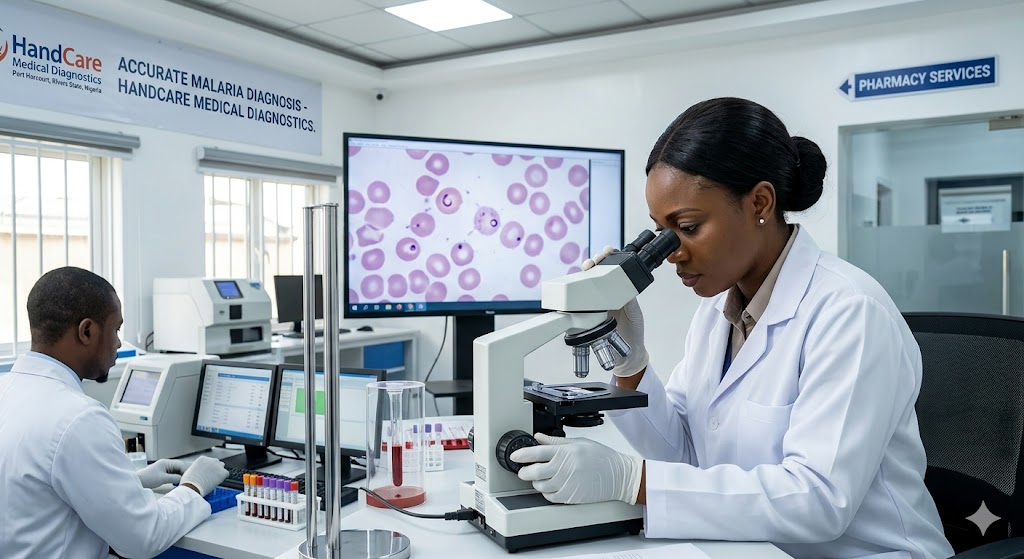
Peripheral Blood Smear (Microscopy): This remains the definitive reference standard for malaria diagnosis. By preparing and staining thin and thick blood films with Giemsa stain, our laboratory scientists can visualize parasites directly within red blood cells. Thick smears offer high sensitivity for detecting low parasite densities, while thin smears allow for exact species identification and precise calculation of the parasitemia percentage (the relative density of parasites in the blood).
Malaria Rapid Diagnostic Tests (RDTs): These lateral-flow immunochromatographic assays detect specific antigens produced by malaria parasites, such as Histidine-Rich Protein II (HRP2) or Parasite Lactate Dehydrogenase (pLDH). RDTs require only a finger-prick blood sample and deliver highly reliable qualitative results within 15 to 20 minutes, serving as an invaluable tool for rapid clinical decisions.
Treatment Options
The primary objective of malaria treatment is the rapid elimination of the Plasmodium parasite from the patient’s bloodstream to prevent uncomplicated disease from transitioning into severe illness or death.
First-Line Medical Therapies
In line with guidelines from the World Health Organization (WHO) and the National Malaria Elimination Programme (NMEP), Artemisinin-based Combination Therapies (ACTs) are the undisputed first-line treatments for uncomplicated Plasmodium falciparum malaria. ACTs combine a fast-acting artemisinin derivative—which rapidly reduces the main parasite load during the first few days—with a partner drug that has a longer elimination half-life to clear any remaining parasites.
Commonly prescribed, highly effective ACT formulations available at HandCare Pharmaceuticals Ltd include:
Artemether-Lumefantrine
Artesunate-Amodiaquine
Dihydroartemisinin-Piperaquine
For severe or complicated malaria, immediate intravenous or intramuscular administration of Artesunate is required for at least 24 hours, followed by a full oral course of an ACT once the patient can tolerate oral medications.
Critical Medical Warning: Monotherapy (using artemisinin or its derivatives alone) and older antimalarials like Chloroquine or Sulfadoxine-Pyrimethamine (Fansidar) are strictly discouraged for treating acute, uncomplicated falciparum malaria due to widespread parasite resistance. Always consult a healthcare professional before starting any medication.
Supportive Care and Recovery
Medical treatment should be complemented by appropriate supportive measures to facilitate recovery:
Adequate Hydration: Encourage consistent intake of clean water, oral rehydration solutions, or clear broths to replace fluids lost through vomiting, diarrhea, and profuse sweating.
Antipyretics: Administer Paracetamol (Acetaminophen) as directed to manage high fevers and alleviate severe muscle aches and headaches.
Rest and Nutrition: Ensure a quiet environment for recovery and provide small, nutrient-dense, easily digestible meals to rebuild physical strength.
Prevention Tips
Preventing malaria requires an integrated approach that combines vector control, environmental management, and targeted medical chemoprophylaxis.
1.Utilize Insecticide-Treated Nets (ITNs): Daily Routine.
Sleep under a long-lasting insecticide-treated bed net every single night. Ensure the net is properly tucked under the mattress and inspect it regularly for tears or holes that could allow mosquitoes entry.
2.Apply Indoor Residual Spraying (IRS): Seasonal Preparation.
Coat the interior walls and ceilings of living spaces with safe, approved residual insecticides. This targets and eliminates adult mosquitoes when they rest on indoor surfaces after feeding.
3.Enforce Environmental Source Reduction: Weekly Maintenance.
Systematically eliminate potential mosquito breeding sites around your property. Drain stagnant pools of water, clear blocked gutters, empty open water storage containers, and trim overgrown bushes or tall grasses close to windows.
4.Deploy Personal Protective Barriers: Evening/Outdoor Strategy.
When outdoors during peak mosquito biting hours (dusk to dawn), wear long-sleeved clothing and trousers. Apply topical insect repellents containing DEET, Picaridin, or IR3535 to exposed skin.
5.Implement Intermittent Preventive Treatment (IPTp): Antenatal Care Profile.
Ensure pregnant women receive scheduled doses of Sulfadoxine-Pyrimethamine (SP) starting in the second trimester under direct healthcare supervision, protecting both mother and unborn child.
When Should You Visit a Doctor?
A common mistake is assuming that a fever will resolve on its own or that self-prescribed over-the-counter medications are sufficient. If you or a loved one experience any of the following clinical warning signs, seek immediate medical attention at an accredited diagnostic and clinical center:
A high fever that fails to respond to standard doses of antipyretics within 24 hours.
Persistent, uncontrollable vomiting or an absolute inability to retain oral medications or fluids.
Noticeable alterations in mental status, extreme lethargy, confusion, or a sudden seizure.
Extreme physical weakness, dizziness, or an inability to stand or sit upright without assistance.
The appearance of deep pallor in the palms, tongue, or inner eyelids, or the passage of dark, tea-colored urine.
Difficult, fast, or labored breathing.
Why Choose HandCare Medical Diagnostics?
When it comes to safeguarding your health and confirming a diagnosis, accuracy and speed save lives. HandCare Medical Diagnostics and HandCare Pharmaceuticals Ltd, located conveniently within Port Harcourt, Rivers State, stand as trusted partners in comprehensive healthcare delivery.
Advanced Laboratory Services: Our facilities are equipped with modern diagnostic machinery, enabling our experienced laboratory scientists to perform high-resolution blood microscopy and ultra-sensitive rapid diagnostic testing with absolute precision.
Comprehensive Medical Diagnostics: Beyond standard malaria tracking, we provide a wide spectrum of hematological, biochemical, and microbiological assessments to differentiate malaria from other febrile tropical illnesses, ensuring you receive the correct diagnosis from the start.
Proactive Health Screening: We design customized, comprehensive health screening packages tailored for individuals, families, and corporate organizations looking to evaluate baseline immunity and overall wellness.
Professional Healthcare Team: Our compassionate, highly skilled team of pathologists, medical laboratory scientists, and clinical pharmacists operates under international standards of quality assurance.
Fast Result Delivery: We understand that clinical delays create anxiety. Our streamlined operational workflows ensure that accurate diagnostic results are delivered promptly, allowing your physician to initiate targeted treatment without delay.
Patient-Centered Care: At HandCare, every patient is treated with dignity, confidentiality, and individualized attention, ensuring a seamless and reassuring healthcare experience.
Frequently Asked Questions (FAQ)
1. Can malaria be cured completely?
Yes. Malaria is a fully curable disease when diagnosed early and treated with the correct course of quality-assured antimalarial medications, such as Artemisinin-based Combination Therapies (ACTs).
2. How long does it take for malaria symptoms to appear after a mosquito bite?
The typical incubation period ranges from 10 to 15 days. However, depending on the specific Plasmodium species and whether you have partial biological immunity or have taken incomplete antimalarial drugs, symptoms can take several weeks or months to emerge.
3. Is it safe to treat malaria without a laboratory test?
No. The WHO strongly discourages presumptive treatment of malaria based on symptoms alone. Many severe conditions, including typhoid fever, viral hepatitis, and respiratory infections, share identical early symptoms. Treating without confirmation can lead to inappropriate drug use, delay correct treatment, and drive drug resistance.
4. Can I get malaria more than once?
Yes. Humans do not develop permanent immunity to malaria. Even if you have successfully recovered from malaria in the past, you can be reinfected if you are bitten by another infected Anopheles mosquito.
5. What is the difference between uncomplicated and severe malaria?
Uncomplicated malaria presents with general symptoms like fever, chills, headaches, and muscle pain without evident organ failure. Severe malaria involves serious organ complications, such as brain involvement (cerebral malaria), profound anemia, respiratory distress, or kidney failure, requiring urgent intravenous medical care.
6. Why are children under five years old at higher risk?
Young children have not lived long enough in a malaria-endemic zone to build partial, naturally acquired immunity to the parasite. As a result, infections can progress rapidly from mild symptoms to severe complications like cerebral malaria or life-threatening anemia.
7. Is malaria dangerous for pregnant women?
Yes, highly dangerous. Malaria during pregnancy suppresses maternal immunity, increases the risk of severe maternal anemia, and can lead to spontaneous abortion, premature delivery, stillbirth, or critically low infant birth weight.
8. Do natural or herbal remedies cure malaria effectively?
There is no reliable scientific evidence demonstrating that traditional herbal remedies can reliably cure acute malaria infections. Relying on unverified treatments often allows the parasite count to rise, increasing the risk of developing severe, life-threatening complications.
9. What are Artemisinin-based Combination Therapies (ACTs)?
ACTs are first-line medications that combine a fast-acting artemisinin derivative (which rapidly kills parasites in the initial stage) with a long-acting partner drug (which clears remaining parasites from the system). This combination provides high cure rates and protects against the development of drug resistance.
10. Where can I get an accurate and fast malaria test in Port Harcourt?
You can walk into HandCare Medical Diagnostics in Port Harcourt, Rivers State. Our laboratory provides highly precise blood film microscopy and rapid diagnostic tests managed by a professional healthcare team, ensuring fast and dependable results.
Conclusion
Malaria is a formidable health challenge across Rivers State, but it is entirely manageable with timely, informed action. Recognizing early signs like cyclical fevers, chills, and headaches, and avoiding the dangers of self-medication are critical steps toward recovery. Protecting your health begins with an accurate diagnostic confirmation.
Do not leave your health to chance. If you or a family member show signs of malaria, visit our facility for precise testing and professional care.
Take charge of your health today:
Book an accurate malaria test at HandCare Medical Diagnostics.
Consult our clinical specialists to find genuine, quality-assured antimalarial medications.
Schedule a comprehensive health screening for your family or corporate workforce.
HandCare Pharmacy – Heal the World.
